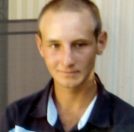
Jack shares his stories of Rum Lane
The building may be long gone but 84-year old David John Hanson has vivid memories of Strathpine’s celebrated Normanby Rum Distillery and has shared his stories in a historical feature film.
 PHOTO: Jack shares his stories of ‘Rum Lane’.
 Mr Hanson, known as Jack, worked at the wood-fired boiler distillery, in what was known as “Rum Lane” (Dixon Street), for 13 years until the facility closure in 1968.
The distillery commenced operating in 1875 and turned over 1,100 gallons (5,000 litres) of rum per day in its heyday.
Division 7 Councillor David Dwyer said the Normanby was the oldest rum distillery in Australia and council received $5,000 funding through Q150 grants to document its story.
He said council’s Q150 film producers were keen to source other people who were either employed or had family links with the distillery, as well as memorabilia such as photographs.
“Many other locals were also involved in providing firewood for the distillery, to keep the boilers going,” Cr Dwyer said.
Cr Dwyer is one of the driving forces behind establishing a replica Normanby Distillery in Old Petrie Town and has worked closely with the park’s YMCA management to do so.
Jack started at the distillery as a general roustabout in 1958, but as he had a ‘steam ticket’ he eventually worked on the boilers.
“In its heyday there were 16 staff members who worked in the distillery, consisting of seven men on the production line, six women in packaging and labelling and two office workers, the manager Frederick ‘Lionel’ Bennett and his son Geoff Bennett,” Jack said.
“In the early days, the distillery bottled its own rum. But in the latter stages, the owner, Lionel, sent quarter casks (32 gallon containers), hogsheads (80 gallon containers), and puncheons (100 gallon containers) to Castlemaine Perkins and Dalgety’s in the city for further processing and bottling.”
Jack said they diluted the rum and turned it into Red Seal, Blue Jacket and Normanby rum labels. The Old Soldier label rum bottled by Dalgety’s was 60 percent Normanby rum and 40 per cent Beenleigh rum.
“In those days people’s drinking habits were different. Men drank rum with a beer chaser,” Jack said.
“Normanby rum was advertised on television as a rum for a man!”
Jack said determining the proof of rum was significant in mass production. “If the rum was overproof it had to be diluted with water,” he said.
“There was an old British navy tale that if rum could light a line of gun powder it was over proof and if the gun powder just flared up it was about right.
“But we never used that method, of course. At the distillery, we used a thermometer and a hydrometer to determine the strength of the rum.”
Jack said rum in its pure form was white when it was produced and caramel was added later to create the brown colouring, with a two-year maturity on average.
“I remember the smell of molasses in the big tanks delivered to the Strathpine railway station from Maryborough and Bundaberg,” he said.
“In the early days bullock drays were used to transport molasses from the station. These were replaced by Ferguson tractors and FJS wagons.”
Jack said in the late 1960s, former Prime Minister Billy McMahon’s brother, Sammy McMahon, a regular wholesale distributor of Normanby rum in Sydney, bought the remainder of the rum stock when the distillery closed.
“He intended to buy into the Strathpine rum distillery, but changed his mind and invested in the Bundaberg rum outlet instead,” Jack said.
“The Normanby distillery was eventually bought for its land value by Queensland United Foods (Peters and Pauls).”
Anyone who has memorabilia to donate to the film or is willing to be interviewed please contact the council on 3205 0555.
The distillery commenced operating in 1875 and turned over 1,100 gallons (5,000 litres) of rum per day in its heyday.
Division 7 Councillor David Dwyer said the Normanby was the oldest rum distillery in Australia and council received $5,000 funding through Q150 grants to document its story.
He said council’s Q150 film producers were keen to source other people who were either employed or had family links with the distillery, as well as memorabilia such as photographs.
“Many other locals were also involved in providing firewood for the distillery, to keep the boilers going,” Cr Dwyer said.
Cr Dwyer is one of the driving forces behind establishing a replica Normanby Distillery in Old Petrie Town and has worked closely with the park’s YMCA management to do so.
Jack started at the distillery as a general roustabout in 1958, but as he had a ‘steam ticket’ he eventually worked on the boilers.
“In its heyday there were 16 staff members who worked in the distillery, consisting of seven men on the production line, six women in packaging and labelling and two office workers, the manager Frederick ‘Lionel’ Bennett and his son Geoff Bennett,” Jack said.
“In the early days, the distillery bottled its own rum. But in the latter stages, the owner, Lionel, sent quarter casks (32 gallon containers), hogsheads (80 gallon containers), and puncheons (100 gallon containers) to Castlemaine Perkins and Dalgety’s in the city for further processing and bottling.”
Jack said they diluted the rum and turned it into Red Seal, Blue Jacket and Normanby rum labels. The Old Soldier label rum bottled by Dalgety’s was 60 percent Normanby rum and 40 per cent Beenleigh rum.
“In those days people’s drinking habits were different. Men drank rum with a beer chaser,” Jack said.
“Normanby rum was advertised on television as a rum for a man!”
Jack said determining the proof of rum was significant in mass production. “If the rum was overproof it had to be diluted with water,” he said.
“There was an old British navy tale that if rum could light a line of gun powder it was over proof and if the gun powder just flared up it was about right.
“But we never used that method, of course. At the distillery, we used a thermometer and a hydrometer to determine the strength of the rum.”
Jack said rum in its pure form was white when it was produced and caramel was added later to create the brown colouring, with a two-year maturity on average.
“I remember the smell of molasses in the big tanks delivered to the Strathpine railway station from Maryborough and Bundaberg,” he said.
“In the early days bullock drays were used to transport molasses from the station. These were replaced by Ferguson tractors and FJS wagons.”
Jack said in the late 1960s, former Prime Minister Billy McMahon’s brother, Sammy McMahon, a regular wholesale distributor of Normanby rum in Sydney, bought the remainder of the rum stock when the distillery closed.
“He intended to buy into the Strathpine rum distillery, but changed his mind and invested in the Bundaberg rum outlet instead,” Jack said.
“The Normanby distillery was eventually bought for its land value by Queensland United Foods (Peters and Pauls).”
Anyone who has memorabilia to donate to the film or is willing to be interviewed please contact the council on 3205 0555.